

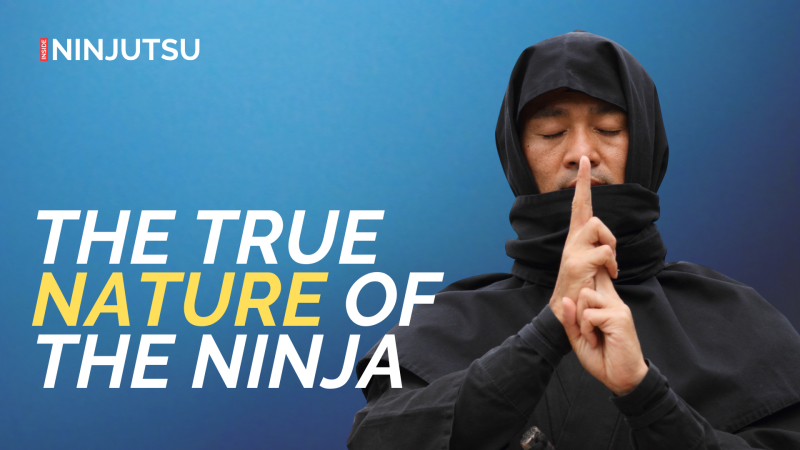
The Most Important Principle of Ninjutsu: Correct Mind
PUBLISHED 8 JUNE 2026
How Historical Ninja Traditions Placed Character Above Martial Ability
Popular culture has long painted the ninja as a shadowy figure who thrives on deception, espionage, and covert action. Films, novels, and video games often reduce the shinobi to little more than a master spy willing to use any means necessary to achieve a goal. Yet the historical record presents a very different picture. Far from celebrating deceit for its own sake, the traditional teachings of ninjutsu place moral character at the very heart of the art.
If there is one characteristic that stands above all others in defining a true ninja, it is the possession of a correct mind.
Without the proper moral foundation, a practitioner is not a shinobi at all. He is simply a thief, criminal, or opportunist who happens to possess useful skills.
Correct Mind in the Bansenshukai
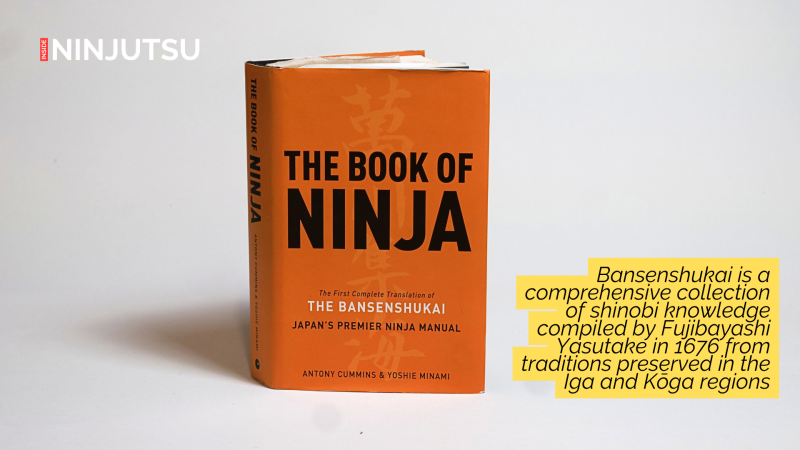
One of the most important historical sources on ninjutsu is the Bansenshukai, a comprehensive collection of shinobi knowledge compiled by Fujibayashi Yasutake in 1676 from traditions preserved in the Iga and Kōga regions. Significantly, the discussion of morality appears at the beginning of the text rather than being treated as an afterthought. This placement alone tells us how essential the authors considered the subject.
In Antony Cummins' English translation, the Bansenshukai states:
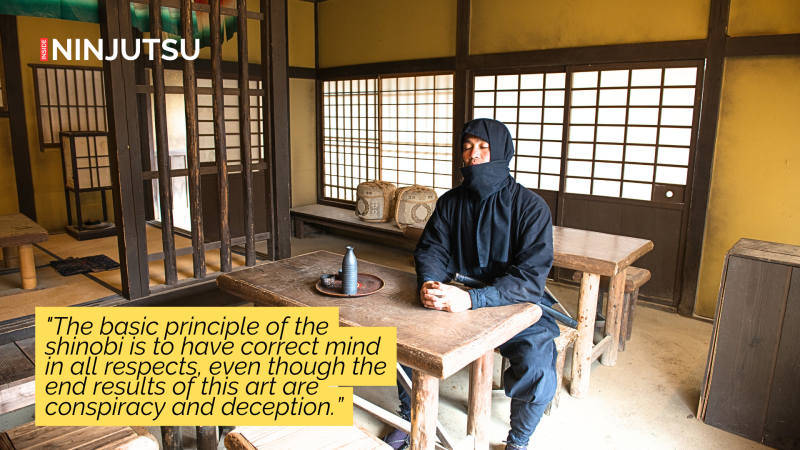
"The basic principle of the shinobi is to have correct mind in all respects, even though the end results of this art are conspiracy and deception. Therefore, unless you can control your mind in a righteous way, you cannot carry out your tactics in a flexible manner."
This passage immediately challenges the common stereotype of the ninja. The authors acknowledge that espionage and deception may sometimes be necessary tools, but they insist that these tools must be directed by a righteous and disciplined mind. The ability to deceive an enemy is not the defining quality of a shinobi. Rather, it is the ability to remain morally grounded while operating in difficult and morally complex circumstances.
The text goes on to explain what is meant by "Correct Mind":
"What we call Correct Mind is about keeping benevolence, righteousness, loyalty and fidelity in check. Without these factors in mind, you cannot attain any great courageous achievement nor fulfil any tactics required for the circumstances at hand."
These virtues draw heavily from Confucian thought and reveal the ethical framework underpinning classical ninjutsu. Benevolence, righteousness, loyalty, and fidelity were not optional extras. They were considered prerequisites for effective action. According to the Bansenshukai, tactical skill divorced from moral character is ultimately self-defeating.
The authors reinforce this point by warning against the misuse of shinobi skills:
"You should be aware that the skills of the shinobi should not be used for your own desire or for a lord who does not have a moral code."
The warning continues by stating that even if selfish schemes appear successful in the short term, they will inevitably bring harm in the end. The message is clear: ninjutsu exists to serve just causes and principled leaders, not personal greed or ambition.
More Than Skills
The Bansenshukai demonstrates that the ninja's first battle was not against an external enemy but against his own weaknesses. Before mastering disguise, infiltration, or intelligence gathering, the shinobi was expected to cultivate self-control and moral clarity.
This distinction is important. Technical proficiency alone does not make a ninja. Someone can learn stealth, observation, and deception techniques, but without the proper ethical framework those same abilities become the tools of a criminal. The historical texts consistently stress that character must come before capability.
In many ways, this reflects a universal truth found throughout the martial traditions of Japan. Technique without virtue is dangerous. Power without wisdom is destructive.
A Principle That Continues Today
The importance of moral development did not disappear with the end of the feudal era. Modern teachers of ninjutsu continue to emphasise the same principle.
Dr Masaaki Hatsumi, the 34th Grandmaster of the Togakure Ryū tradition, discusses the essential qualities of the ninja in Ninjutsu: History & Tradition. In his list of eighteen traditional martial disciplines, the very first item is not combat-related at all. It is spiritual refinement.
Dr Hatsumi writes:
"The Togakure ninja worked at developing a deep and accurate knowledge of himself, his personal power, his strengths and weaknesses, and his influence on the playing out of life. The ninja had to be very clear about his intentions, his commitments and his personal motivations in life. Personality traits could often mean the difference between life and death in his line of work."
This is a remarkable observation when viewed alongside the historical sources. Spiritual refinement is placed above unarmed combat, swordsmanship, horsemanship, swimming, and every other physical skill. The order is significant. Before a ninja could hope to master the external arts, he first had to understand and master himself.
Self-awareness allowed the shinobi to recognise his own fears, ambitions, weaknesses, and prejudices. A person who lacks this understanding can easily become controlled by emotion, ego, or impulse. For someone engaged in intelligence gathering or operating in dangerous situations, such flaws could prove fatal.
The emphasis on spiritual refinement also mirrors the Bansenshukai's insistence on Correct Mind. Across centuries of transmission, the core message remains unchanged: the quality of the individual matters more than the techniques they possess.
The Number One Characteristic of a Ninja
If we search for the single most important characteristic of a ninja, the historical evidence points overwhelmingly in one direction.
It is not stealth.
It is not deception.
It is not combat skill.
It is not physical toughness.
It is character.
The ninja was expected to cultivate a correct mind rooted in benevolence, righteousness, loyalty, and fidelity. His actions were to be guided by ethical principles rather than selfish desires. His skills existed to serve a worthy purpose, not personal gain.
The Bansenshukai places this teaching at the very beginning of its instruction, and modern masters such as Dr Masaaki Hatsumi continue to stress the importance of spiritual refinement and self-knowledge. Together, these sources reveal a consistent thread running through the tradition: before becoming an effective shinobi, one must first become a good human being.
That may be the most misunderstood lesson of ninjutsu—and perhaps its most important.
MORE CONTENT


Add comment
Comments