

Taijutsu Foot Trapping
PUBLISHED 14 MAR 2026
How a subtle taijutsu principle can immobilise, unbalance and control an opponent
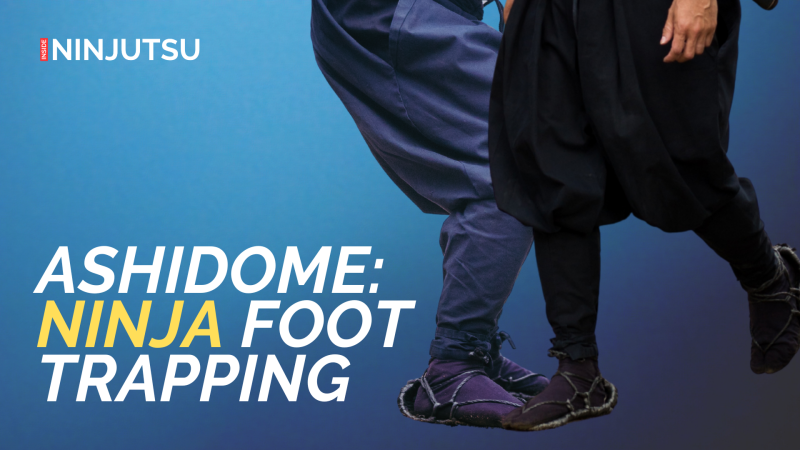
In a recent episode of the Ninja / Ninjutsu Podcast, respected Bujinkan instructor Don Roley highlighted a subtle but highly effective element of taijutsu that many practitioners outside Japan overlook: the control of an opponent through the feet and legs. Known as ashidome—literally “stopping the foot”—this principle focuses on trapping, pinning, or destabilising an opponent by manipulating their lower body.
According to Roley, many martial artists instinctively focus on the hands during an exchange—blocking punches, applying locks, or striking. However, the feet often go unnoticed. By carefully positioning one’s own foot against an opponent’s, it becomes possible to drastically limit their mobility and structural stability.
One simple example is stepping directly onto an opponent’s toes or foot. This seemingly minor action can immobilise the opponent, preventing them from retreating or adjusting their stance. Once their ability to move is removed, the practitioner gains a decisive advantage in controlling the encounter.
Another variation involves attacking the opponent’s knee from the side. By applying pressure to the knee joint while maintaining superior body positioning, the practitioner can quickly compromise the opponent’s balance. Even a larger attacker can be forced off their base and taken to the ground once their structure is disrupted.
Roley demonstrates that when these principles are applied correctly, size differences become far less important. In his demonstration, despite his training partner being physically larger, the moment the foot is trapped the partner loses stability and control. With their structure broken, the opponent becomes easy to manipulate.
The concept also reflects a broader strategic mindset often seen in Japanese martial traditions. Rather than attempting to overpower a stronger adversary, the practitioner removes the opponent’s options—particularly their ability to move. Once an opponent cannot retreat or reposition, control of the encounter becomes significantly easier.
Importantly, Roley stresses that these ideas should not be learned from books or videos alone. While such resources can reveal the existence of the principle, the mechanics require hands-on instruction from a qualified teacher. Improper application can easily result in serious injuries, particularly to the knee joint.
For practitioners of ninjutsu and taijutsu, the lesson is clear: effective movement is not only about what the hands are doing. The feet play a crucial role in controlling distance, structure, and balance. By learning to recognise and apply foot trapping methods such as ashidome, students can deepen their understanding of the subtle mechanics that make traditional Japanese martial arts so effective.
Often, the smallest movements create the greatest advantage—and sometimes victory begins simply by controlling where the opponent can place their foot.


Add comment
Comments