

What Did the Samurai Eat?
PUBLISHED 9 JUNE 2026
Rice, Rations, and the Daily Diet of Japan's Warriors
According to author and historian Stephen Turnbull, rice was the foundation of the samurai diet. In his book The Samurai, Turnbull explains that meals were often simple, especially when warriors were on campaign. Rice provided the bulk of their nutrition, but samurai supplemented it whenever possible with fish, vegetables, and other locally available foods.
If a stream was nearby, a samurai might catch fish or prepare a simple soup using fish stock and whatever leaves or vegetables he could find. A typical diet consisted of rice, miso soup, fish, vegetables, and pickled foods. Common vegetables included daikon radish, eggplant, cucumber, napa cabbage, burdock root, and various leafy greens. Because refrigeration did not exist, households relied heavily on tsukemono—Japanese pickles preserved through fermentation that could remain edible for weeks or even months.
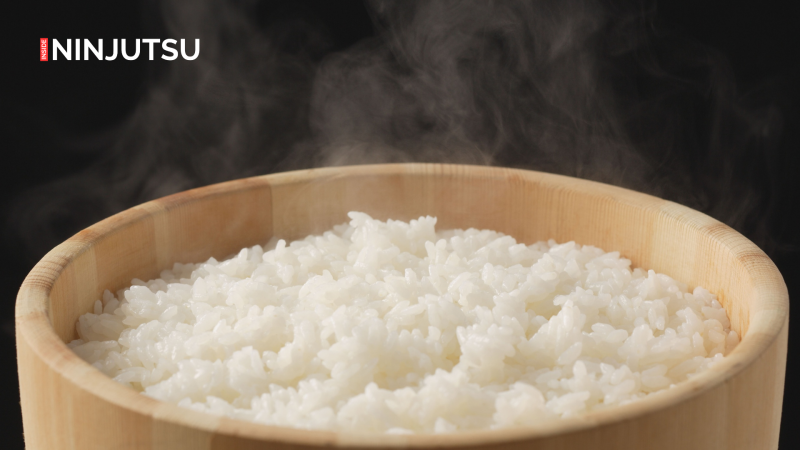
On the battlefield, warriors carried practical rations such as dried rice, miso, dried fish, pickled plums, and rice balls. Lower-ranking soldiers often cooked meals in upturned helmets. Pre-cooked dried rice could be mixed with a little water and boiled into a quick, portable meal.
Rice was more than food in feudal Japan—it was also a form of currency. Samurai were paid in rice stipends measured in units called koku, with one koku representing roughly enough rice to feed a person for a year. A samurai's wealth and status were often measured by the amount of rice allocated to him by his lord.
Although Buddhist traditions discouraged meat consumption, samurai sometimes ignored these restrictions and ate pork, wild boar, or rabbit. These foods were considered valuable sources of strength and stamina.
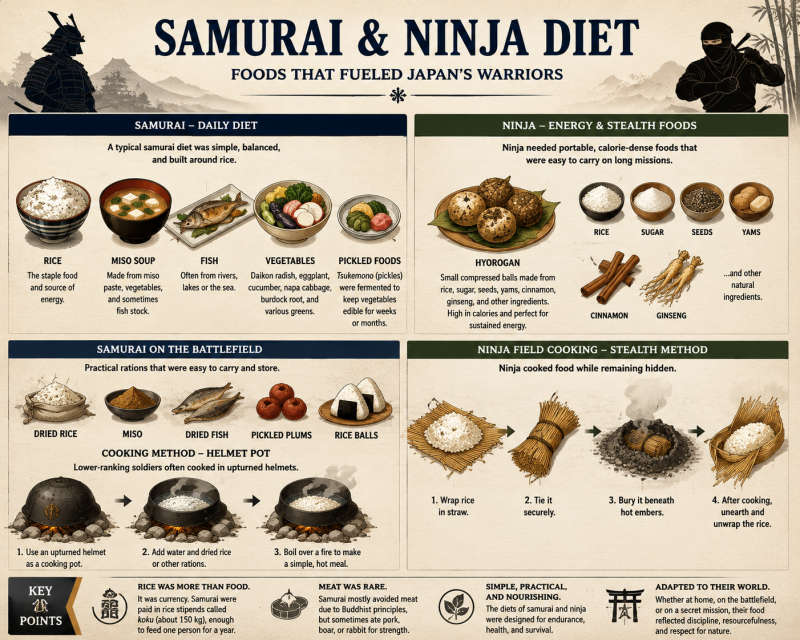
Meanwhile, ninja relied on highly portable energy foods known as hyorogan. These small compressed balls were made from ingredients such as rice, sugar, seeds, yams, cinnamon, and ginseng. Dense in calories and easy to carry, they were ideal for long missions. Ninja also developed practical field-cooking methods, including wrapping rice in straw and burying it beneath a fire to cook while remaining concealed.
Simple, portable, and nourishing, the foods of the samurai reflected the realities of a warrior's life—providing sustenance both at home and on the battlefield.

MORE CONTENT


Add comment
Comments