

Hōjutsu: The Art of Samurai Gunnery
PUBLISHED 4 APR 2026
When we picture the samurai, the image is almost always the same—armoured warriors, blades drawn, bound by the code of the sword. Yet beneath this iconic vision lies a lesser-known discipline that reshaped Japanese warfare forever: Hōjutsu, the art of the gun.
Subject matter expert Matt Okuhara explores this transformative martial tradition, tracing its origins, evolution, and battlefield impact.
The Arrival of Thunder
The story of Hōjutsu begins not in Japan, but at sea. In 1543, a Portuguese vessel—having set out from Goa—was blown off course and forced to land on the island of Tanegashima. Among its crew were European traders carrying matchlock firearms, weapons virtually unknown in Japan at the time.
The local lord, Tanegashima Tokitaka, was just 15 years old when he first encountered these weapons. Hearing what sounded like thunder on a clear day, he witnessed birds falling from the sky with each explosive crack.
For Tokitaka, the significance was immediate.
“If I had that power in my hand, I’d be a very powerful samurai.”
Through intermediaries using shared written Chinese characters, a deal was struck. Tokitaka exchanged gold for two firearms—one of which he ordered his swordsmith to dismantle and replicate.
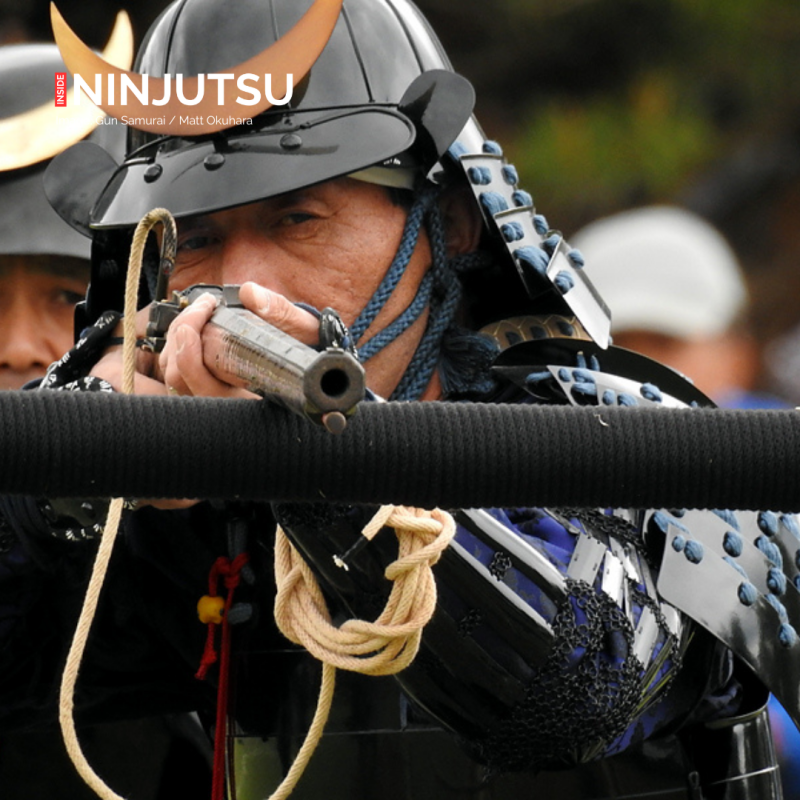

Reverse Engineering a Revolution
Japan already possessed rudimentary gunpowder knowledge, but the craftsmanship required to produce firearms—particularly precision components like screws—posed a significant challenge. It took roughly a year for Japanese artisans to successfully reverse-engineer the weapon. By 1544, domestic production had begun, marking the birth of widespread firearm use in Japan.
From this point, Hōjutsu began to take shape—not as a foreign import, but as a distinctly Japanese martial discipline.
From Bow to Gun: The Evolution of Technique
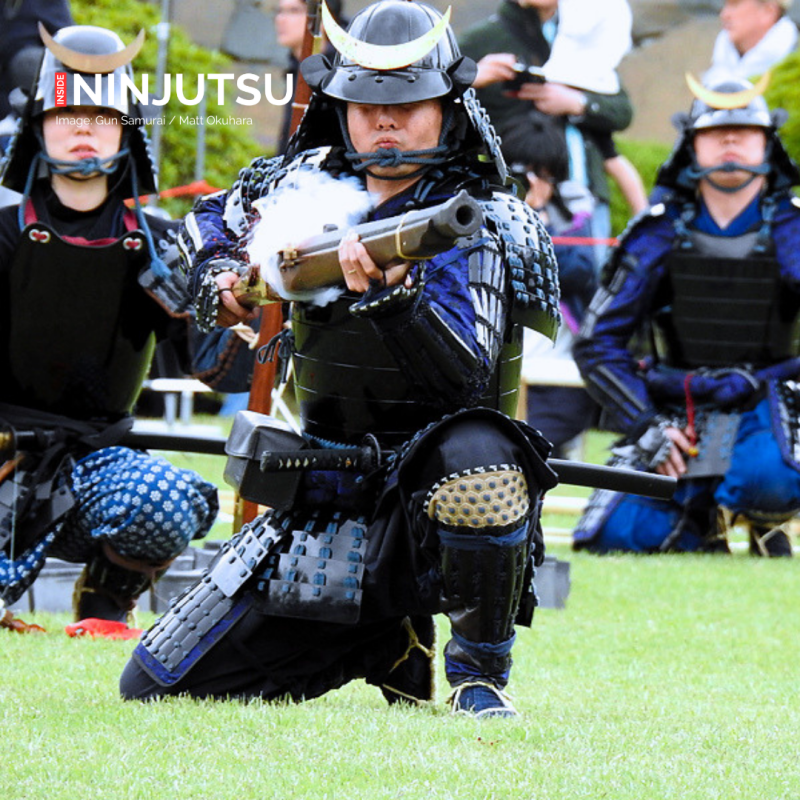
Interestingly, Hōjutsu did not emerge in isolation. Its foundations were deeply rooted in Kyūdō, the traditional art of the bow.
According to Okuhara, many of the movements in gun training mirror those of archery: Stance, aiming, and firing posture.
Without weapons in hand, a practitioner of Hōjutsu and Kyūdō would appear almost identical in form.
This continuity highlights a key truth: rather than replacing existing traditions, firearms were integrated into them.

The Battlefield Transformed
Before the arrival of guns, the pinnacle of samurai warfare lay in cavalry combat. Elite warriors fought from horseback using bows, spears, and bladed weapons, executing coordinated charges that often determined the outcome of battle. Firearms changed everything.
At the Battle of Uedahara, one of the earliest engagements involving guns, a small unit of just 60 gunners faced a cavalry force under Takeda Shingen.
As Okuhara explains, the results were dramatic. When the cavalry closed within range, the gun line opened fire. The effects were devastating: horses, unaccustomed to gunfire, panicked, riders were thrown from their saddles, and the sheer noise disrupted formations. Even repeated charges failed. Volley after volley broke the attacking force, forcing retreat and inflicting significant losses. For the first time, a relatively small, disciplined gun unit had halted elite cavalry.


Tactical Innovation and the Rise of Gun Units
Following encounters like Uedahara, Japan’s warlords quickly recognised the strategic importance of firearms. A transitional period emerged between 1568 and 1575, during which tactics evolved rapidly:
- Mixed units of archers and gunners
- Coordinated volleys to compensate for slow reload times
- Dedicated firearm units within larger armies
This evolution reached its peak at the Battle of Nagashino, where thousands of gunners were deployed under Oda Nobunaga. Here, disciplined volley fire and defensive positioning demonstrated the full potential of firearms, cementing their place in Japanese warfare.
Power, Control, and the New Order
Firearms did more than change tactics—they shifted power. Control over gun production and the resources required to manufacture gunpowder—such as saltpetre—became a decisive advantage. Leaders who mastered this new technology gained leverage over rivals, accelerating the unification of Japan under dominant warlords.
As Okuhara notes, the message became clear: adapt—or be left behind.
A Living Tradition
Despite its historical significance, Hōjutsu remains one of the lesser-known martial arts today. Yet it is still practiced, preserving techniques that date back to the moment gunpowder reshaped the samurai world. It stands as a reminder that the samurai were not bound solely to the sword. They were innovators, tacticians, and early adopters of transformative technology. In the echo of gunfire across a 16th-century battlefield, we hear not the end of tradition—but its evolution.


Add comment
Comments