


Five Reasons to Visit the Samurai Exhibition at the British Museum
PUBLISHED 28 MAR 2026
A journey beyond myth into the real world of the samurai
At the British Museum, a remarkable exhibition is reshaping how we understand one of history’s most mythologised warrior classes. Running until 4 May, this sweeping collection of more than 150 objects invites visitors to look past cinematic clichés and explore the evolving reality of the samurai—from battlefield fighters to cultured elites, and finally to global icons.
Praised as “an extraordinary encounter” and “ravishing, riveting”, the exhibition offers both spectacle and substance. Here are five compelling reasons—each centred on a standout object—why it deserves your attention.

1. The Entrance Armour: Power, Prestige, and Global Influence
The first thing you encounter is unforgettable: a striking suit of samurai armour combining iron, silk, wool, gold, and lacquer. Its helmet dates to 1519, while the armour itself was crafted in 1696—already hinting at how samurai identity evolved across centuries.
More than protection, this armour is theatre. The golden iris-leaf standard mounted on the back was designed to intimidate and identify, transforming the wearer into a moving symbol of authority. Intriguingly, elements of the design show the influence of Portuguese soldiers, reflecting Japan’s early encounters with Europe.
This single object encapsulates a key theme of the exhibition: samurai were not static relics of the past, but participants in a changing, globally connected world.
2. The Battle of Yashima Screen: Where Legend Meets Storytelling
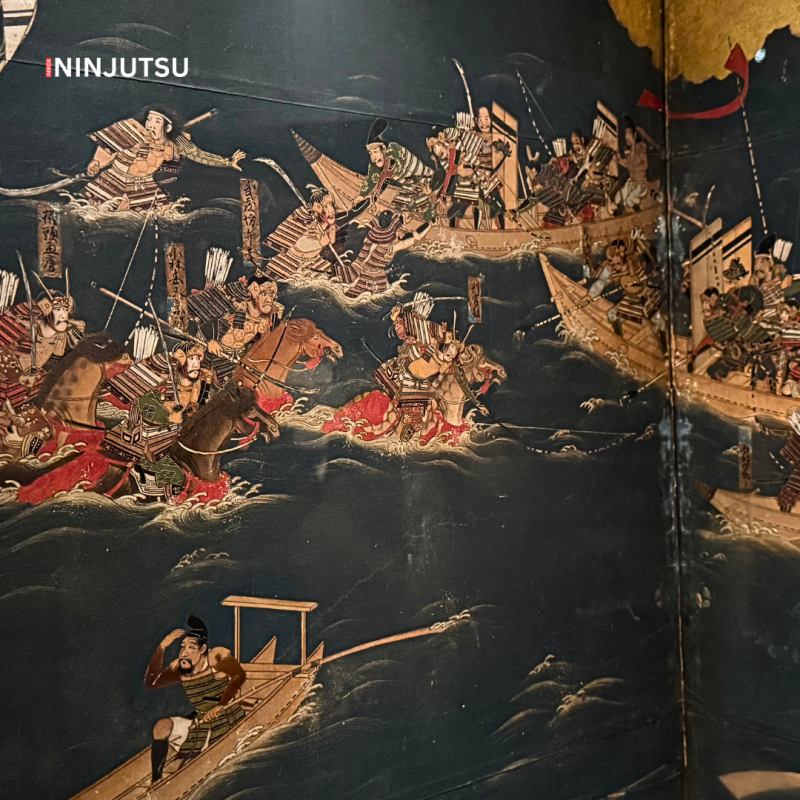
A folding screen from the early-to-mid 1600s depicts the famous Battle of Yashima (1185), bringing to life one of the most celebrated episodes in samurai lore.
The scene is dramatic: as the defeated Taira clan retreats by boat, a young noblewoman dares a Minamoto warrior to prove his skill. In response, Nasu no Yoichi rides his horse into the surf and fires an arrow that strikes a fan mounted on a mast.
This is not just art—it’s myth-making in action. Created centuries after the event, the screen reveals how samurai stories were retold, embellished, and preserved. It reminds us that what we “know” about samurai often comes through layers of interpretation, not direct history.
3. The Archery Set: Discipline Beyond the Battlefield
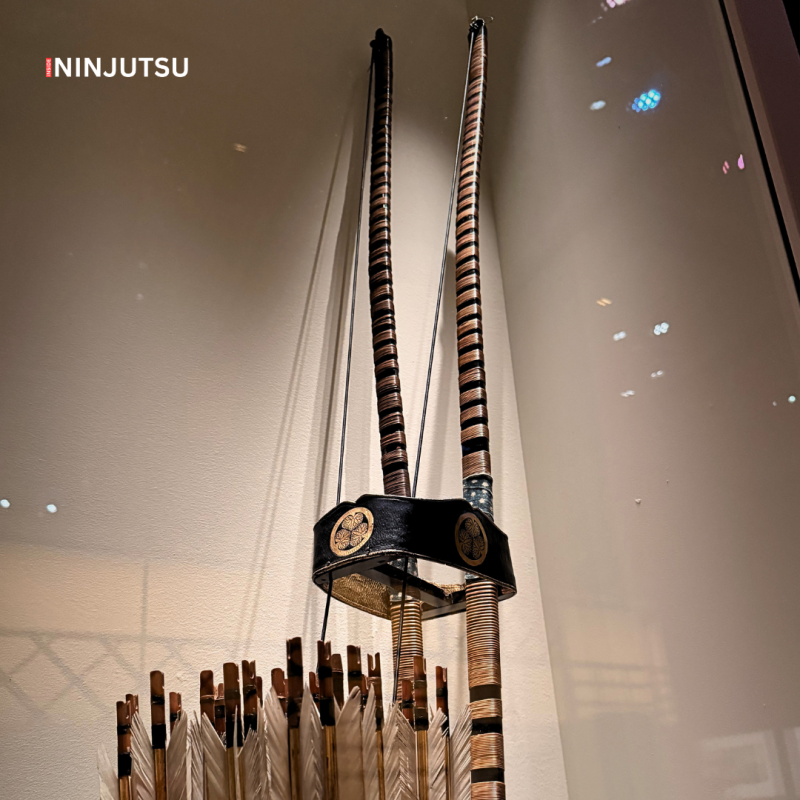
Before swords became symbolic of the samurai, the bow was their primary weapon. This beautifully crafted archery set—made from bamboo, feathers, silk, and other natural materials—offers a glimpse into that earlier martial tradition.
Even during the long peace of the Tokugawa era, archery remained essential. Samurai were required to maintain their skills, not because they expected battle, but because discipline itself was part of their identity.
This object highlights a quieter truth: being a samurai was as much about training, ritual, and self-cultivation as it was about combat.

4. The Conch Shell and War Drum: The Sound of Command
War is not only visual—it is auditory. The conch shell (horagai) and war drum on display reveal how sound shaped the chaos of battle.
Different pitches of the conch shell signalled commands such as advance or retreat, while the steady rhythm of the drum helped coordinate movement across large forces. In an age before radios, these instruments were essential tools of command and control.
Even more fascinating is their afterlife: in peacetime, they retained ceremonial and symbolic roles, echoing the transformation of the samurai from warriors to cultural figures.

5. The Antique Blades: Legacy, Loss, and Reinvention
Few objects are as closely associated with the samurai as the sword. Yet the antique blades in this exhibition tell a story that extends far beyond feudal Japan.
During the Second World War, many Japanese officers carried ancestral swords into battle—symbols of lineage and identity. After Japan’s defeat, tens of thousands of these blades were surrendered and dispersed across the world as war trophies.
These swords therefore represent both continuity and rupture: they connect medieval warriors to modern conflict, and tradition to global redistribution. They challenge visitors to think about how cultural heritage can be preserved, lost, or reinterpreted.
What makes this exhibition exceptional is not just the beauty of its objects, but the honesty of its narrative. It dismantles the idea of the samurai as timeless warriors governed by an unchanging code, instead revealing a complex social class that adapted across centuries.
From battlefield tactics to poetry, from political power to pop culture, the samurai story is one of transformation. And in today’s world—where myth and reality are often blurred—that story feels more relevant than ever.
If you have even a passing interest in Japanese history, martial culture, or the evolution of global myths, this exhibition is essential viewing.


Add comment
Comments