


Veteran Yabusame Archer Takes His Final Ride
PUBLISHED 30 JUL 2026
A perfect farewell for a master of mounted archery
A lifetime in the saddle comes to a perfect conclusion as Takahashi Shinsuke retires from one of Japan's oldest martial traditions
For more than half a century, Takahashi Shinsuke dedicated himself to one of Japan's most spectacular and demanding martial arts. At 75 years of age, the veteran horse archer has now brought that journey to an end, retiring from the ancient practice of yabusame after a fitting final performance in which he struck all three targets before an appreciative crowd at Nikko Toshogu Shrine.
Despite suffering from health problems that had forced him away from the saddle for nearly a decade, Takahashi returned for one last ride. It was not simply an athletic challenge, but a deeply personal commitment to a tradition that had shaped his life.
His final arrows found their mark.
According to NHK, the veteran described his successful farewell with characteristic humility:
"I managed to hit them somehow. The horse really helped me. I'm grateful to have had this opportunity to end my career as an archer."
For spectators, it was a moving conclusion to a lifetime devoted to preserving one of Japan's oldest living martial ceremonies.
More Than Mounted Archery
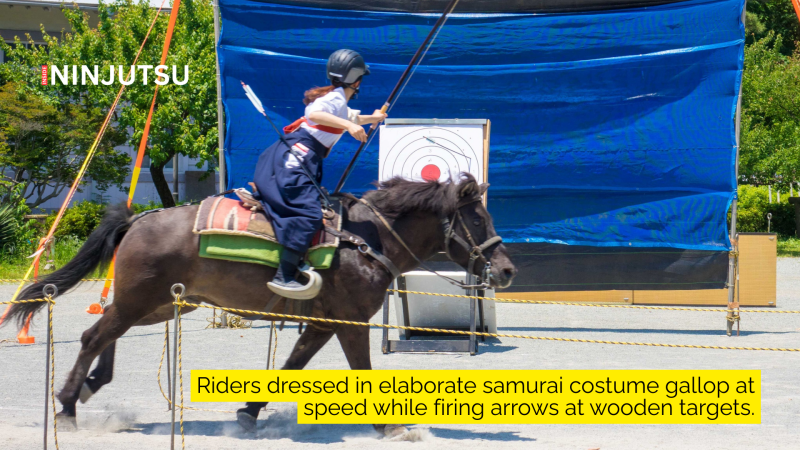
To many outside Japan, yabusame (流鏑馬) appears to be little more than an impressive display of horseback archery. Riders dressed in elaborate samurai costume gallop at speed while firing arrows at wooden targets. It is certainly visually spectacular, but the reality runs much deeper.
Yabusame is fundamentally a Shinto ritual, not a competitive sport.
Its purpose is to honour the gods (kami) and pray for peace, prosperity, abundant harvests and the wellbeing of the nation. Every ride is conducted with solemn ceremony, strict etiquette and centuries-old traditions that have changed remarkably little over the generations.
The rider becomes part warrior, part priestly participant.
The ceremony is performed at numerous shrines throughout Japan, often during annual festivals, and remains one of the country's most recognisable expressions of living samurai culture.
An 800-Year Tradition
The origins of yabusame stretch back to the early Kamakura Period (1185–1333).
According to tradition, Minamoto no Yoritomo, founder of the Kamakura Shogunate, became concerned that his samurai were losing their mounted archery skills. Rather than simply drilling his warriors militarily, he introduced ceremonial horseback archery as both practical training and an offering to the gods.
The combination of martial discipline and religious devotion proved enduring.
For over eight centuries, generations of mounted archers have preserved the tradition, passing techniques from teacher to student with extraordinary care.
Today, yabusame stands as one of the closest living links to the mounted warfare of medieval Japan.
Training for the Battlefield
Although today it survives primarily as ceremony, yabusame developed from genuine battlefield requirements.
Mounted samurai needed to shoot accurately while galloping over uneven terrain, often against heavily armoured opponents.
Interestingly, the placement of yabusame targets is believed to replicate one of the few vulnerable areas on a warrior wearing full ō-yoroi armour: the narrow opening beneath the helmet visor.
Success therefore represented far more than sporting accuracy—it symbolised the ability to land a decisive battlefield shot.
A Life Dedicated to Tradition
Takahashi Shinsuke's own journey began in Nikko.
Born and raised in the historic town, he was introduced to yabusame at the age of 23 while working at a riding club.
As he explained to NHK:
"I've always admired samurai. As a Japanese person, they stirred the blood. I happened to like horses. So that led me to yabusame."
That simple combination of admiration for Japan's warrior heritage and a love of horses evolved into a lifelong calling.
For decades he became one of Nikko's most respected riders, helping preserve a tradition that has become inseparable from the shrine's annual ceremonies.
However, nine years ago, declining health forced him to step away. Many assumed his riding days were over. Instead, Takahashi made the remarkable decision to return for one final appearance.
One Last Challenge
Returning after such a long absence was far from straightforward.
NHK's report showed Takahashi training on a specially constructed wooden practice horse, carefully rebuilding the muscle memory needed to draw a bow while in motion.
Even during rehearsals the day before the ceremony, problems remained. His timing was slightly off, preventing him from drawing smoothly as the targets approached. Yet he continued practising alone.
Reflecting on his determination, he admitted:
"It's not a matter of life or death, but I have to do it even if it destroys my body."
Those words capture the mindset found throughout many traditional Japanese arts, where perseverance and commitment are often valued as highly as technical skill itself.
A Perfect Farewell
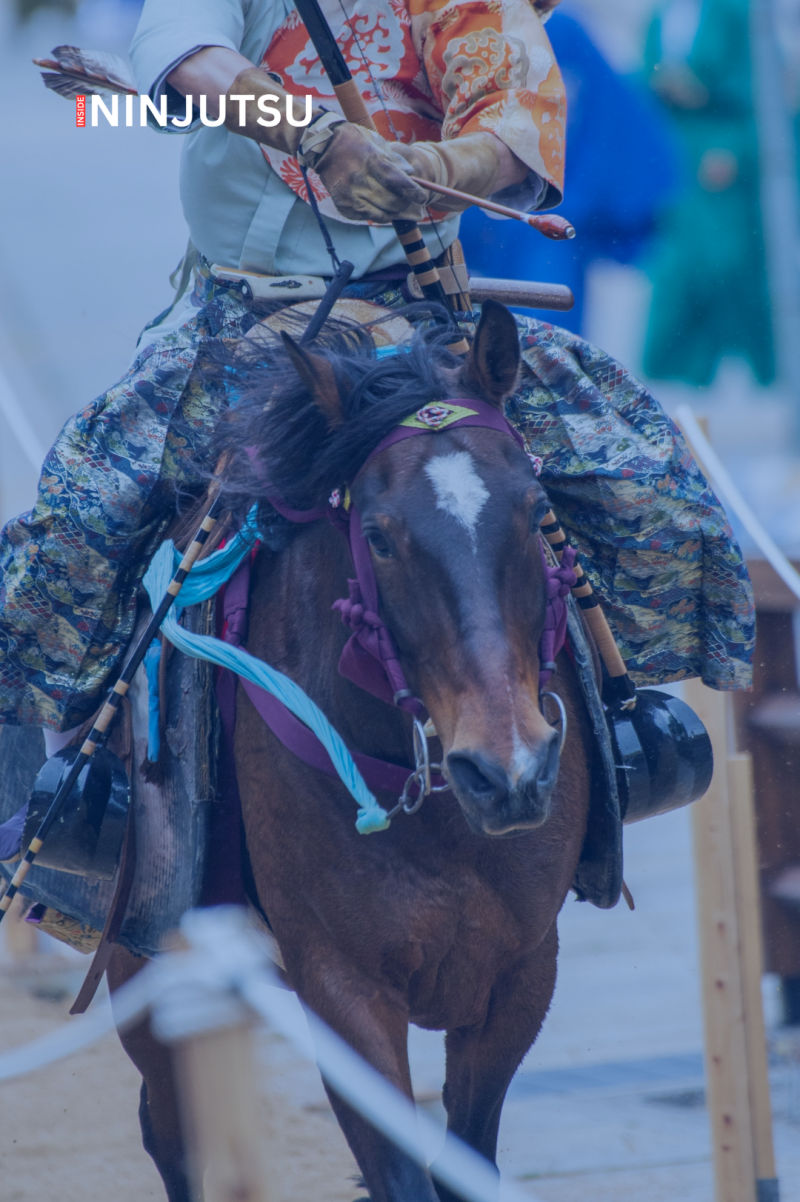
On the day of the ceremony, Takahashi dressed in ceremonial samurai attire dating back hundreds of years before mounting his horse.
The atmosphere was charged with anticipation. As horse and rider accelerated down the track, the first arrow flew. A clean hit. Then the second. Another success. Finally came the third target. Once again, the arrow struck home. Three shots. Three hits. It was difficult to imagine a more appropriate ending for a lifetime devoted to yabusame.
NHK concluded its report by observing that Takahashi's arrows carried "the pride and courage of a life dedicated to the yabusame tradition."
On his final ride, they did exactly what every archer hopes they will do. They found their mark.

MORE CONTENT


Add comment
Comments