


The Last Guardians of Ninjutsu
PUBLISHED 10 SEPT 2026
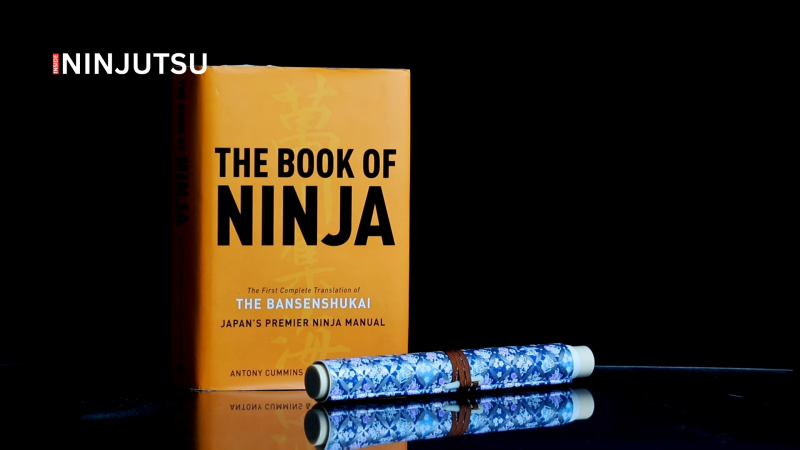
Antony Cummins: Uncovering the Real Ninja
For centuries, the ninja has occupied a strange place between history and legend. Popular culture has given us the familiar image of the black-clad assassin, creeping through the darkness with a sword or dagger. But the historical shinobi was far more complex.
In the latest edition of Inside Ninjutsu’s Last Guardians of Ninjutsu, British author and researcher Antony Cummins explores the reality behind the legend – from the role of the shinobi within medieval armies to the skills required for covert operations and the methods used to defend fortifications against enemy spies.
For Cummins, the shinobi as we understand the term reached its height during the 1500s. Rather than existing as a separate class of mysterious warriors, shinobi could operate within the structure of a samurai army, with different individuals undertaking very different roles.
Some were sent into enemy territory for extended periods, establishing themselves within the local community and gathering information. Others worked within their own army, scouting perimeters and looking for infiltrators. Groups could be tasked with setting traps, bells and tripwires, while others accompanied soldiers and helped guide them through difficult terrain.
The word “ninja”, Cummins suggests, therefore covers a much broader range of activities than the familiar image of the lone infiltrator.
A Warrior Built for the Mission
One of the most intriguing aspects of Cummins’ research is the question of training.
Despite our fascination with samurai and shinobi combat, there is a major gap in the historical record. We do not have a clear description of exactly how warriors of the Warring States period trained in swordsmanship or combat.
What we do have are later military manuals that preserve information about skills associated with the earlier period. These point towards a remarkably broad collection of abilities: climbing, running, moving across marshland, negotiating doorways, fire skills, unarmed combat and the use of weapons.
The shinobi arsenal could extend well beyond swords and throwing weapons. Gunpowder, climbing equipment, underwater equipment, bridge-building and other specialised tools all formed part of this world.
This creates an important distinction between the historical shinobi and the modern idea of a standardised martial arts syllabus.
Cummins points out that warriors were not necessarily trained in exactly the same way. Instead, individuals could be selected and developed according to their particular abilities and the needs of the mission. One person might specialise in a particular skill, while another developed an entirely different set of capabilities.
It was less like everyone following the same syllabus and more like assembling a specialist team.
The Ninja vs the Castle
If shinobi were learning how to infiltrate enemy territory, someone had to learn how to stop them.
Cummins reveals some of the measures that could be used to protect a fortress or castle town from spies. During wartime, trees could be removed from around a castle to reduce opportunities for an infiltrator to approach unseen. Areas could be covered with sand to make movement easier to detect.
Defenders could also alter the layout of a location by constructing temporary or false walls. These could confuse anyone relying on previous knowledge of the area and make navigating the fortress far more difficult.
Even something as ordinary as a well could become a security concern. Wells were guarded because of the threat posed by spies operating from within the castle town, including the possibility of poisoning water supplies. Ammunition and gunpowder stores also required protection.
It is a reminder that the battle between shinobi and their enemies was not simply about physical confrontation. It was a contest of observation, deception, preparation and counter-deception.
Reconstructing a Lost Tradition
Cummins’ work goes beyond researching historical documents. He has attempted to take the information contained within them and turn it into practical study.
He describes reconstructing equipment such as fire tools and rope ladders, while also experimenting with rope bridges. Some techniques are easier to test than others – climbing historic castles, for example, presents obvious modern-day problems.
But the process is part of a much larger project: bringing forgotten knowledge back into active practice.
Cummins has built a worldwide community of students and enthusiasts around this work, sending regular exercises and material to participants as part of an ongoing programme of study.
In doing so, the historical record becomes more than something to read. It becomes something to investigate, test and experience.
The Part of Ninjutsu Nobody Talks About
Perhaps the most unexpected part of our conversation comes when Cummins considers why people are drawn to ninjutsu in the first place.
The answer isn't simply historical curiosity.
For Cummins, one of the great strengths of the modern ninja community is the sense of camaraderie it can create. People may initially arrive looking for ninja training, but as they discover the wider world surrounding it, they can become interested in different areas of Japanese warfare, culture and historical practice.
The training becomes a gateway.
There is a social element too: a community of people with a shared interest, working together, learning together and keeping something alive that might otherwise disappear.
And perhaps that is one of the most important roles of the Last Guardians of Ninjutsu.
Preserving a tradition isn't simply about protecting old documents or reproducing historical techniques. It is also about ensuring that the knowledge continues to inspire people.

MORE CONTENT


Add comment
Comments