

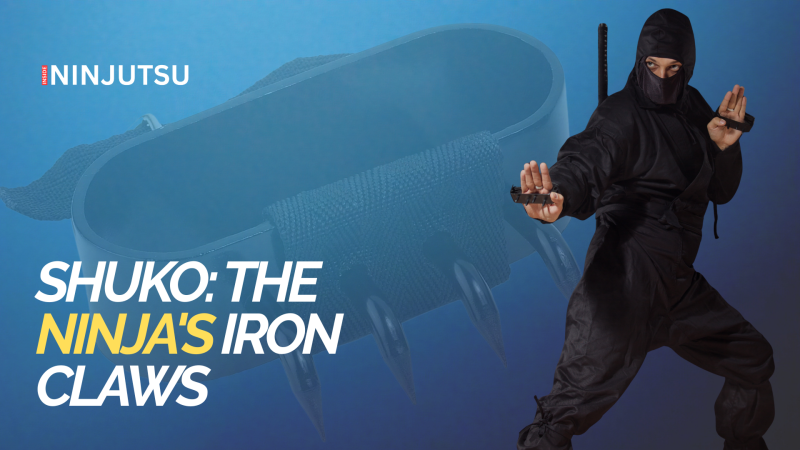
Shuko: The Ninja's Iron Claws
PUBLISHED 31 JUL 2026
A Guide to the Ninja's Iron Hand Claws
Part climbing aid, part defensive tool and one of the most recognisable implements associated with ninjutsu, shuko continue to fascinate martial artists and historians alike.
Few pieces of ninja equipment capture the imagination quite like shuko, the iron hand claws often depicted in films, comics and video games. Usually shown as fearsome weapons capable of scaling castle walls or tearing through opponents, the reality is both more nuanced and arguably more interesting.
Within traditional ninjutsu, shuko occupy a unique place. Rather than being a weapon in their own right, they are best understood as a specialised tool that could serve several purposes depending on the situation.
What Are Shuko?
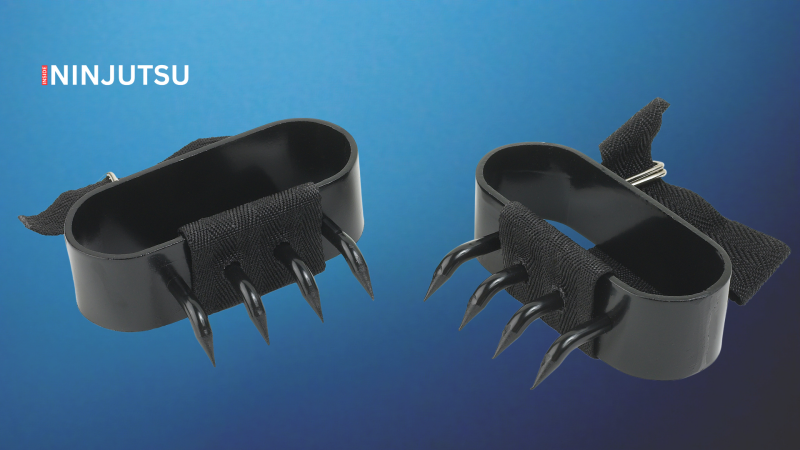
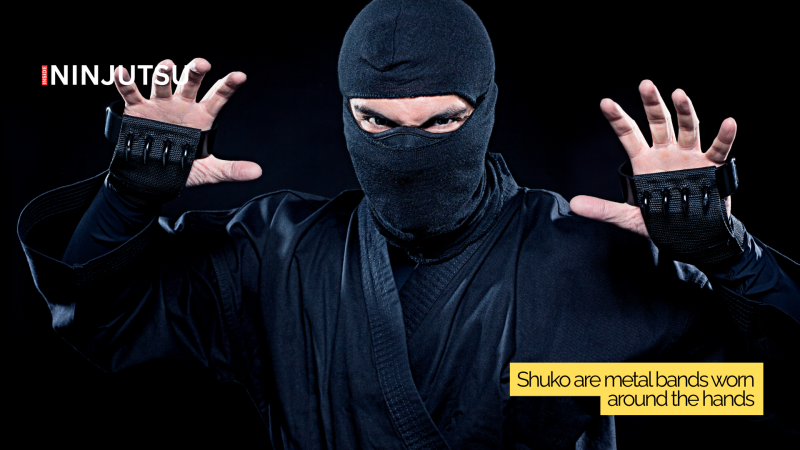
Shuko are metal bands worn around the hands, fitted with several sturdy spikes projecting from the palm side. They are commonly paired with ashiko, similar spiked bands strapped to the feet.
According to Dr Masaaki Hatsumi in Ninjutsu: History and Tradition, shuko are a speciality tool of Togakure Ryū, one of the classical schools associated with ninjutsu. Together with ashiko, they form part of the school's distinctive equipment and training methods.
Although often referred to simply as "ninja claws", the spikes were designed to provide grip rather than resemble an animal's talons.
Climbing with Iron Claws
Perhaps the best-known use of shuko is as a climbing aid.
Combined with ashiko, the claws could provide additional purchase when ascending trees, earthen embankments, rocky slopes or other uneven surfaces. Traditional sources also describe their use when climbing the sides of ships or negotiating difficult terrain during covert movement.
They were also practical tools beyond climbing. The sturdy spikes could be used for scraping away loose earth or digging shallow holes.
Like many items of traditional ninja equipment, shuko were intended to solve practical problems rather than serve a single purpose.
Shuko in Combat
Although climbing is their best-known function, martial arts traditions also teach combative applications.
Dr Hatsumi notes that shuko could be employed as an improvised weapon, with the spikes used to rake or strike an opponent if circumstances demanded. When worn together with ashiko, even kicks could become considerably more dangerous.
Perhaps the most intriguing application appears in Shoto Tanemura's Ninpō Secrets. Tanemura explains that shuko are taught within sections covering taihenjutsu (body movement) and mutō-dori, the art of disarming an armed opponent.
Rather than simply attacking with the claws, practitioners learn how the spikes can engage an opponent's weapon during defensive movement. In dark conditions, Tanemura suggests that an attacker may struggle to understand how their sword has apparently been stopped by what appears to be an empty hand.
Such techniques require exceptional timing, precision and courage, and form part of advanced training within the classical tradition.
Tekagi and Ashikagi
Different historical sources use different names for these implements.
In Sengoku Ninpō Zukan, the hand claws are referred to as tekagi, while the foot-mounted versions are called ashikagi.
As with many aspects of ninjutsu, terminology was not always standardised.
History or Hollywood?
Like many items associated with the ninja, shuko have become surrounded by myth.
Popular culture often portrays ninja effortlessly scaling sheer stone castle walls using nothing more than iron claws strapped to their hands and feet. While visually dramatic, historians question how practical such feats would have been in reality.
Would there have been sufficient time to strap on the claws while escaping pursuit? Could the spikes gain reliable purchase on dressed stone? Even climbing a tree would depend greatly on the type of bark, the angle of ascent and the user's experience.
Likewise, combative applications such as trapping or controlling a sword require extraordinary skill and commitment. These techniques should not be viewed as simple tricks but as advanced methods taught within specific martial traditions.
Rather than seeing shuko as a miraculous gadget, it is perhaps more useful to regard them as one specialised tool among many available to the historical shinobi.
A Window into Ninja Thinking
Whether used for climbing, improving traction or supporting specialised martial techniques, shuko reflect one of the defining characteristics of ninjutsu: adaptability.
The historical shinobi were not defined by exotic weapons but by their ability to solve problems using whatever equipment best suited the situation. A simple iron implement could assist movement, aid survival and, if necessary, become part of a defensive strategy.
That versatility is perhaps the real lesson of shuko. They remind us that ninja tools were rarely designed with a single purpose in mind. Instead, they embodied the practical ingenuity that lies at the heart of the ninjutsu tradition.
As with many aspects of ninja history, separating documented tradition from popular imagination remains an ongoing challenge. Yet whether viewed as climbing aids, specialised martial equipment or symbols of Japan's espionage traditions, shuko continue to be among the most fascinating implements associated with the legacy of the shinobi.

MORE CONTENT


Add comment
Comments