

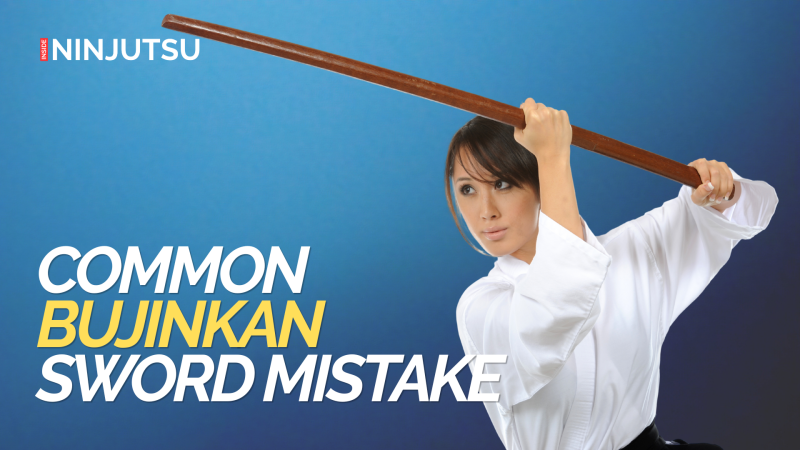
Correcting a Common Sword Mistake in the Bujinkan
PUBLISHED 28 APR 2026
Grip Matters
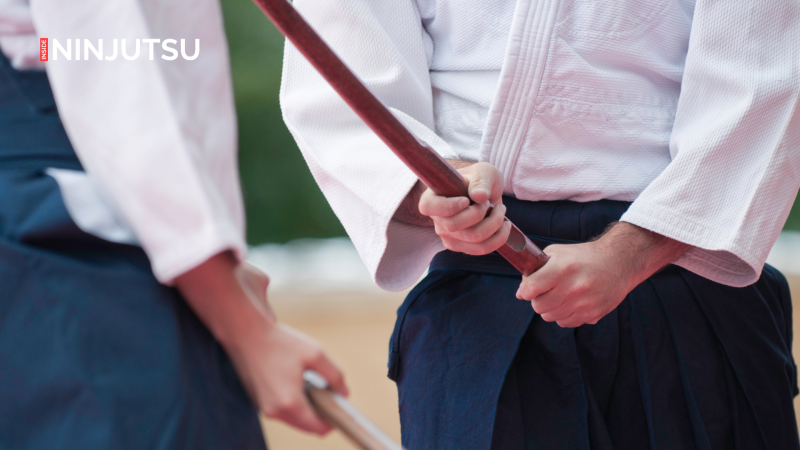
A subtle but significant error continues to appear in some corners of the Bujinkan community — how practitioners grip the sword.
According to respected instructor Don Roley, the issue lies in students extending their index fingers rather than wrapping them firmly around the handle. While this method can be seen in other martial arts, Roley is clear: it does not belong in Bujinkan practice.
“Do not do this… you do not grab like this,” he states bluntly, highlighting that the mistake is still being passed down among practitioners today.
Cross-Training Confusion
Roley explains that the origin of this habit may trace back to early Western exposure to ninjutsu. He points to Stephen K. Hayes, one of the first Americans to train in Japan under Masaaki Hatsumi during the 1970s.
At the time, Hayes’ training in Japan was relatively brief, and according to Roley, may not have included extensive weapons instruction. As a result, Hayes is said to have looked to other disciplines — particularly Aikido — to fill in the gaps.
“He did not learn sword in Japan, so he had to go and learn from aikido. And yes, aikido does grab it like this. We don’t.”
While this adaptation may have made sense in context, Roley suggests that the influence has lingered, with some Bujinkan practitioners unknowingly adopting habits from outside systems.
What the Bujinkan Teaches
Within the Bujinkan, proper sword handling is rooted in the teachings passed down from Hatsumi and his instructor, Toshitsugu Takamatsu. The correct grip involves all fingers securely wrapped around the tsuka, ensuring control, structure, and effective transmission of force.
To support his point, Roley directs practitioners to Hatsumi’s published material:
“Pick up… the book by Hatsumi Sensei on sword fighting and go through… I can assure you, you won’t” find images showing the extended index finger grip.
Tradition vs Interpretation
Roley, founder of the Colorado Springs Bujinkan Dojo and a practitioner with nearly 15 years’ experience training in Japan, emphasises the importance of staying true to the source material.
His message is not necessarily critical of other systems—he acknowledges that different arts have their own methods—but stresses that mixing them can lead to technical drift.
“If you’re Bujinkan, do what… Hatsumi and the other people do.



Add comment
Comments
Thank you for that clarification. It always seemed counterintuitive to extend the fingers past the guard.