

When Ninjas Took Over Prime Time
PUBLISHED 23 DEC 2025
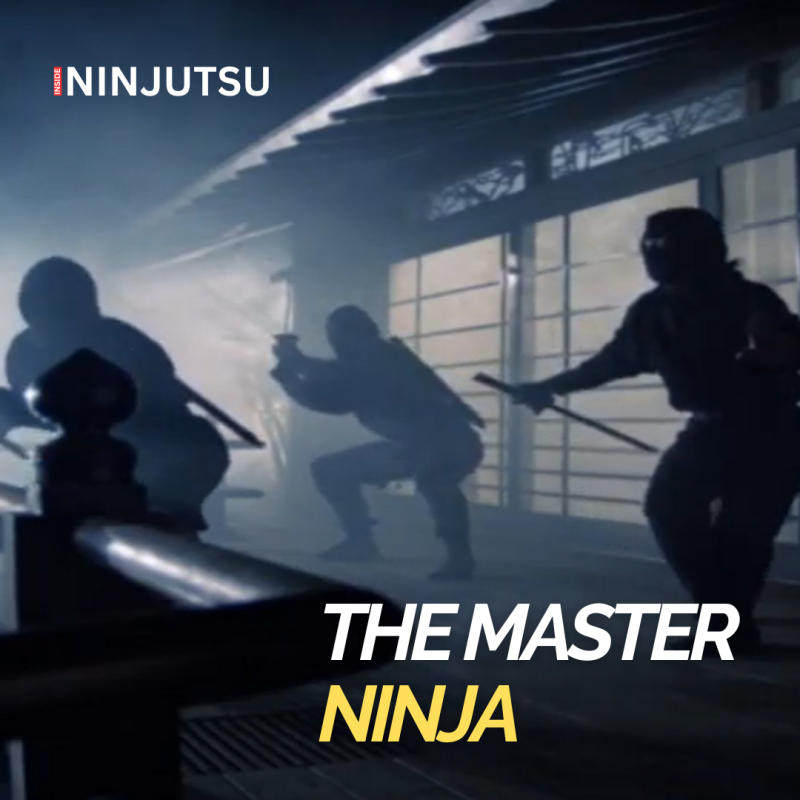
The Master (1984)
By the early 1980s, America was in the grip of a full-blown ninja boom.
Martial arts films flooded video stores. Sho Kosugi became a household name. Black-clad assassins appeared everywhere—from drive-in theatres to Saturday morning cartoons. At the same time, television audiences had an insatiable appetite for action heroes who lived by their own codes: The A-Team, Knight Rider, Magnum, P.I., and Airwolf ruled the airwaves.
It was only a matter of time before ninjutsu stepped fully into prime time.
In 1984, NBC answered that call with The Master—a short-lived but unforgettable action series starring Lee Van Cleef, a Hollywood legend stepping into an entirely new kind of role.
The Premise: A Ninja on the Road
The Master centered on John Peter McAllister, a decorated American war veteran who had trained in the arts of ninjutsu in Japan. Now older, quieter, and haunted by his past, McAllister leaves Japan after learning he has a daughter somewhere in the United States—a daughter he has never met.
Accompanying him is Max Keller, a young, brash American drifter who becomes McAllister’s student. Together, they travel from town to town, following leads in search of McAllister’s daughter while repeatedly being drawn into conflicts where their skills—and their values—are tested.
But McAllister’s past refuses to let him go.
He is hunted by Okasa, a deadly former pupil who believes McAllister has betrayed the ninja sect by leaving it. Okasa’s pursuit provides the show with a recurring antagonist and an air of inevitability—violence always lurking just behind the next quiet moment.
The Cast: Legends and Rising Stars
Lee Van Cleef – John Peter McAllister
Best known for his iconic roles in The Good, the Bad and the Ugly, For a Few Dollars More, and countless Westerns, Lee Van Cleef brought instant gravitas to The Master. At over 50 years old during filming, he was an unconventional choice for a martial arts lead—but that was precisely the point.
McAllister was not flashy. He was restrained, disciplined, and weary. Van Cleef’s lined face and piercing stare conveyed a man who had seen too much and carried his regrets silently. In many ways, The Master was about age, consequence, and restraint, themes rarely explored in ninja fiction at the time.
Timothy Van Patten – Max Keller
Playing the eager student Max Keller, Timothy Van Patten brought youthful energy and curiosity to the series. Max served as the audience surrogate—learning ninjutsu alongside us, asking questions, and occasionally acting before thinking.
Van Patten would later go on to an enormously successful career behind the camera, directing episodes of The Sopranos, Game of Thrones, Boardwalk Empire, and more—making his time as Max Keller an intriguing early chapter in his career.
Sho Kosugi – Okasa
If Van Cleef was the soul of the show, Sho Kosugi was its fire.
Already a martial arts icon thanks to films like Enter the Ninja and Revenge of the Ninja, Kosugi brought authenticity and menace to Okasa. His movements were sharp, precise, and terrifyingly efficient. Okasa wasn’t a cartoon villain—he was a professional, driven by loyalty to tradition and a personal sense of betrayal.
Kosugi’s presence ensured that The Master never drifted too far into TV fantasy; the threat always felt real.
Though it lasted only one season, The Master occupies a unique space in ninja media history. It was one of the first attempts to humanize the ninja archetype for television—less about assassination, more about philosophy, discipline, and responsibility.
Its road-show format mirrored classics like Kung Fu, while its action set pieces reflected the kinetic energy audiences craved in the 1980s.
Most importantly, it framed ninjutsu not as spectacle, but as a lifelong path.
Could The Master Work Today?
The short answer: absolutely—but it would need to evolve. A modern reboot would likely lean into:
- Serialized storytelling rather than episodic adventures
- Themes of legacy, aging, and unfinished business
- Corporate espionage, surveillance, and global power structures
- A grounded, realistic approach to martial arts combat
The massive success of Cobra Kai proves there is an appetite for legacy martial arts stories that bridge generations. Like The Master, Cobra Kai thrives on nostalgia while speaking directly to modern anxieties.
A rebooted The Master could explore:
- What it means to carry ancient traditions into a digital world
- Whether old codes can survive modern warfare
- The cost of secrecy in an age of constant surveillance
An Okasa Spin-Off?
Perhaps the most intriguing possibility lies in the villain.
With Kane Kosugi, Sho Kosugi’s son, now an accomplished martial artist and actor in his own right, the door is open for a generational continuation of Okasa’s legacy. A spin-off or parallel storyline exploring the ninja sect’s perspective—its rules, punishments, and internal conflicts—could add depth rarely seen in the genre.
The Master may have aired for only a brief moment, but its impact lingers. It arrived at the perfect intersection of martial arts obsession and television storytelling, anchored by one of cinema’s great screen legends.
In an era hungry for stories about legacy, discipline, and identity, The Master feels less like a relic—and more like a blueprint waiting to be rediscovered.
Sometimes, the path of the ninja only reveals itself when the world is finally ready to see it again.

MORE CONTENT


Add comment
Comments